Automotive Service
Scheduling Software
From Appointment Booking to an
End-to-End Dealer Business Platform
Why scheduling should be an integral part of the DMS — and how connected planning, execution and AI-assisted booking improve aftersales performance

A service appointment may look like a simple calendar entry. For a dealership, however, every booking is an operational commitment. The requested work must be matched with the right technician, service bay, time allowance, parts availability and customer mobility option.
When these elements are managed in separate applications, the result is often familiar: repeated calls, duplicate data entry, overbooked teams, idle capacity, delays and customers who do not know when their vehicle will be ready.
Modern automotive service scheduling software should therefore do more than exchange appointment data with a dealer management system. Scheduling should be an integral part of the DMS and the wider dealer business platform.
Only then can the dealership create one continuous process from the first customer contact and service planning through workshop execution, order extensions, billing, payment and vehicle handover.
This end-to-end approach also ensures that everyone involved works with the same planning and execution information: service desk and call-centre employees, service advisors, workshop controllers, technicians, management and, through the customer portal, the customer.
Increasingly, the booking process can also be supported by an AI appointment scheduling assistant such as the proaxia VSS AI Voicebot. Customers can describe their service needs in natural language, receive guidance during the conversation and arrange an appointment over the phone based on actual workshop availability.
The AI assistant is most valuable when it is not an isolated telephone application, but another interaction channel within the same end-to-end service process.

What is automotive service scheduling software?
Automotive service scheduling software manages service appointments and aligns them with actual workshop capacity.
Unlike a basic online calendar, it considers the operational context behind each request:

However, effective automotive service scheduling is not only about checking whether a suitable time slot is available. The appointment is the first operational step of a wider service process. Information captured during booking must remain available when the vehicle is checked in, the service order is prepared, work is assigned to technicians, additional repairs are identified, customer approval is requested and the vehicle is handed back.
For this reason, scheduling should not be treated as a separate application that sends a limited set of appointment data to the DMS. It should be an integral capability of an end-to-end dealer business platform. The objective is not merely to fill time slots. It is to create a reliable and executable service plan.
Why a DMS interface alone is not enough
Many appointment scheduling applications offer integration with different dealer management systems. The depth and quality of these integrations can vary significantly. Some integrations transfer only basic customer, vehicle and appointment information. Others also synchronise selected capacity or service-order data. These interfaces can be useful, but exchanging data between two applications does not automatically create an end-to-end business process.
An interface can transfer data. It does not necessarily provide shared process ownership. When appointment planning takes place in one system and service execution in another, operational gaps can remain.
For example:

These gaps create manual coordination, duplicate data entry and inconsistent customer communication. When scheduling is an integral part of the dealer business platform, the appointment, service order, workshop plan and execution status share the same business context.
Changes during service planning or workshop execution can then be reflected throughout the process without relying on separate applications to synchronise selected data records. Scheduling becomes a process stage rather than a data handover.
Why basic car service scheduling is no longer enough
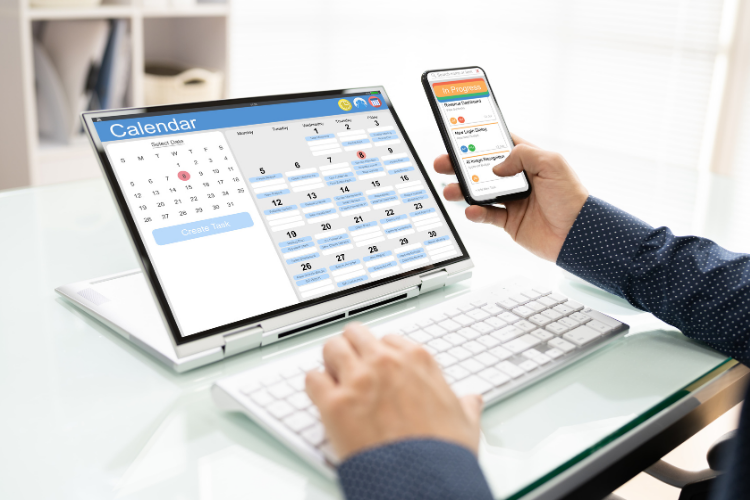
Customers want to book at a convenient time and through their preferred channel. Some prefer an online customer portal. Others contact the dealership by phone, speak with a service advisor or use an AI-assisted voice channel. The workshop, meanwhile, needs a schedule that reflects real capacity.
These two perspectives only come together when car service scheduling is directly connected with the dealership’s operational processes.
A basic booking tool may show that 10:00 a.m. is available. It may not know that the requested diagnostic work requires a certified technician, that a recall should be completed during the same visit or that a replacement vehicle is required.
It may also fail to reserve sufficient time for the specific vehicle and repair type. Automotive repair service scheduling software closes this gap by translating the customer request into an operational service requirement. It checks whether the people, equipment, skills and time required are available.
But even this is only part of the process. Once the vehicle arrives, planning information must be connected with actual service execution. If the scope changes, additional work is identified or the repair takes longer than expected, the workshop plan, service order, customer communication and expected completion time should all reflect the new situation.
This continuous connection between planning and execution is only possible when scheduling is part of the same end-to-end dealer business platform.

The capabilities that make end-to-end scheduling effective
Omnichannel appointment booking within one process
Customers should be able to request, confirm, reschedule or cancel appointments through their preferred channel.
Possible channels include:
Every channel should use the same customer and vehicle information, appointment rules and live workshop capacity.
The channel may differ, but the underlying business process should remain the same.
This prevents the web portal, call centre and service advisors from offering competing time slots or working with different service information. It also ensures that an appointment created by an AI voicebot is operationally equivalent to an appointment created by an employee.


AI-assisted voice booking
An AI appointment scheduling assistant adds a conversational channel to the service process.
Instead of navigating an online form or waiting for a service advisor, customers can describe their vehicle and service requirements in their own words, much as they would when speaking with a human employee.
The assistant can guide the dialogue with relevant follow-up questions, support the identification of the vehicle, capture the requested service and check suitable appointment options in real time.
Once the customer selects a suitable option, the appointment can be created directly in the connected scheduling environment.
This makes telephone-based self-service more convenient and helps ensure that the information required for workshop preparation is captured from the beginning.
AI-assisted voice booking is particularly valuable for routine appointment requests, during periods of high call volume and for customers who prefer the telephone to an online portal.
It can also extend the availability of standard appointment scheduling while allowing service employees to focus on complex enquiries, individual consultation and exceptional cases.
However, an AI voicebot should not operate as an isolated telephone or chatbot application.
To create operational value, it needs access to the same customer, vehicle, service, capacity and process information as all other booking channels. The result should be a confirmed and executable appointment rather than an unstructured callback request that must later be entered manually.
Capacity-based workshop planning
Effective scheduling considers more than dealership opening hours.
It allocates work according to:
A maintenance service, a diagnostic request and a complex repair may each require different skills, resources and time allowances.
Capacity-based planning takes these differences into account instead of treating every available appointment slot as identical.
This helps balance workloads, reduces operational bottlenecks and gives workshop controllers a realistic view of upcoming demand.
Because the plan is part of the same end-to-end process as service execution, actual progress can also be compared with the original plan. Delays, additional work or changed priorities can be reflected in the workshop schedule as they occur.


Shared planning and execution status
An end-to-end dealer business platform gives every role access to the information required for its part of the process.
This does not mean that everyone uses the same screen or sees the same level of detail. It means that every role works with the same underlying process status.
For example:
The benefit comes from a shared source of process information.
When a technician updates the repair status, the workshop controller sees the effect on the plan. When a customer approves additional work, the service advisor and technician receive the relevant update. When the estimated completion time changes, customer communication can be adjusted accordingly.
Customer, vehicle and service context
Car service scheduling software becomes more valuable when it uses the complete customer and vehicle context already available within the dealer business platform.
The process can consider:
This context creates a more personal booking experience and helps the dealership prepare the visit properly.
The same information can support an AI appointment scheduling assistant. During a voice-based conversation, the assistant can guide the customer through the identification of the vehicle and the description of the service requirement.
This reduces incomplete requests and gives the workshop a better understanding of the expected work before the vehicle arrives.


Upselling and order extensions
The service process does not remain static after the appointment has been created.
Additional service opportunities may be identified during booking, vehicle check-in or workshop execution. These may include due maintenance, accessories, tyre services, deferred repairs or additional work discovered by the technician.
In a fragmented system landscape, these opportunities often require manual coordination between the technician, workshop controller, service advisor and customer.
Within an end-to-end dealer business platform, upselling and order extensions can become part of the same process.
For example:
- 1The technician records an additional finding.
- 2The service advisor prepares an order extension.
- 3The customer receives the request through the appropriate communication channel or customer portal.
- 4The customer approves or rejects the additional work.
- 5The service order, parts requirement and workshop plan are updated.
- 6The technician receives the updated work scope.
- 7The expected completion time and customer status information are adjusted.
This creates a direct connection between service execution, customer approval, workshop planning and revenue generation.
It also reduces the risk that approved work is not reflected in the operational plan or that customers receive outdated completion information.
Automated communication and customer interaction
Confirmations, reminders and status notifications reduce manual follow-up and keep customers informed.
Communication can be triggered when:
Customers receive a more consistent experience, while service teams spend less time providing routine updates.
Because communication is based on the same process status as workshop planning and execution, the dealership can provide more reliable information.
This is fundamentally different from sending generic messages from a separate appointment application that has limited visibility of the actual repair process.


End-to-end integration from appointment to handover
Scheduling should not end when the vehicle enters the workshop.
The appointment must become part of a continuous service process that includes:
When these steps are managed within one dealer business platform, information does not need to be recreated at every process transition.
The appointment provides the initial planning context. The service order builds on that context. Workshop execution updates the operational status. Billing and handover complete the process.
The business value for dealerships and dealer networks
An end-to-end scheduling process improves customer convenience, but its strategic value goes much further.
What to look for when selecting a solution
The right automotive service scheduling software should not become another isolated application in the dealership’s system landscape.
Dealerships should consider whether the solution provides:

Usability is equally important. Customers need a fast and intuitive booking experience, regardless of whether they use the customer portal, speak with a service advisor or interact with an AI voicebot.
Dealership employees need role-specific views and the ability to handle changes and exceptions without switching between disconnected systems or relying on manual workarounds.
The decisive question is therefore not only: Can the appointment application exchange data with our DMS? The more important question is: Is appointment scheduling an integral part of the same end-to-end business process as service planning, workshop execution, customer approval, billing and handover?
proaxia VSS as an End-to-End Dealer Business Platform
The greatest business value is created when appointment scheduling is not added to the DMS as a separate application, but is embedded in an end-to-end dealer business platform.
proaxia Vehicle Sales & Service is designed to support the complete dealer service process.
Appointment scheduling is connected with:

This allows planning and execution to form one continuous process.
A service desk employee or call-centre agent can access the information required to answer a customer enquiry. The service advisor can view the appointment, prepare the order and manage customer approval. The workshop controller can monitor planned and actual capacity. The technician can record progress and additional findings. The customer can receive relevant information through the customer portal. All roles work with the same underlying business process and status information.
The proaxia VSS AI Voicebot extends this end-to-end process to customers who prefer to arrange their appointment by phone. Through an AI-powered natural-language dialogue, customers can describe their vehicle and service requirements in a familiar, conversational way. The assistant guides them through the booking process, supports the identification of the vehicle and requested service, checks suitable availability and creates the appointment in the connected VSS environment.
Based on SAP Business Technology Platform and SAP Business AI, the proaxia VSS AI Voicebot is designed as an additional interaction channel within the wider VSS process rather than as an isolated telephone application. The appointment information therefore becomes part of the same operational workflow used for service planning and workshop execution.
This reduces manual re-entry and ensures that web booking, customer portal interactions, employee-assisted booking and AI-powered voice booking use a consistent process and data foundation. Automotive service scheduling software should therefore not be viewed as a digital calendar or a standalone application connected to the DMS. It should be viewed as an integral business capability within an End-to-End Dealer Business Platform.
By connecting customer interaction, appointment scheduling, workshop planning, service execution, upselling, order extensions, customer approval, billing and handover, dealerships can create a more convenient customer experience, make better use of resources and improve aftersales performance.
Frequently Asked Questions about Automotive Service Scheduling Software
From theory to practice: How modern DMS solutions create real added value
Take the next step now
Is your appointment solution merely connected to your DMS — or is scheduling an integral part of your complete dealer business process?
Discover how proaxia Vehicle Sales & Service and the proaxia VSS AI Voicebot connect customer interaction, appointment booking, workshop planning, service execution, upselling, order extensions, billing and vehicle handover within one continuous, SAP-based End-to-End Dealer Business Platform.

proaxia Vehicle Sales & Service
SAP-based Dealer Management System for integrated sales, service and aftersales processes - efficient, transparent and scalable.
Your expert

Matthias Kolb
Senior Consultant, proaxia consulting group
Matthias Kolb is a driving force in automotive digitalization, transforming complex processes into streamlined, customer-centric solutions. With deep industry expertise, he partners closely with automotive businesses to unlock efficiency and accelerate change — bridging the gap between technology and real-world operations.