Dealer Management for
Industrial Truck Dealers
Digital sales, rental and service processes
for industrial truck dealers
The industrial truck business is evolving from traditional equipment sales toward integrated, service-oriented solutions. Customers no longer expect only forklifts, pallet trucks, stackers or other material handling equipment. They increasingly require complete packages that combine consulting, financing, rental service, maintenance, spare parts and digital support throughout the equipment lifecycle.
With SAP-based solutions from proaxia, industrial truck providers digitalize their processes from equipment sales and rental to workshop management, field service and customer management. Integrated data, connected equipment and intelligent automation create the foundation for higher availability, more efficient operations and scalable business models in the material handling industry.

Your Business Value
Challenges for
Industrial Truck Dealers
Providers of industrial trucks must do much more today than sell and maintain equipment. Customers expect reliable availability, flexible rental options, fast repairs and transparent information about their equipment. At the same time, businesses must coordinate complex fleets, workshop capacity, mobile technicians, spare parts and changing customer requirements.
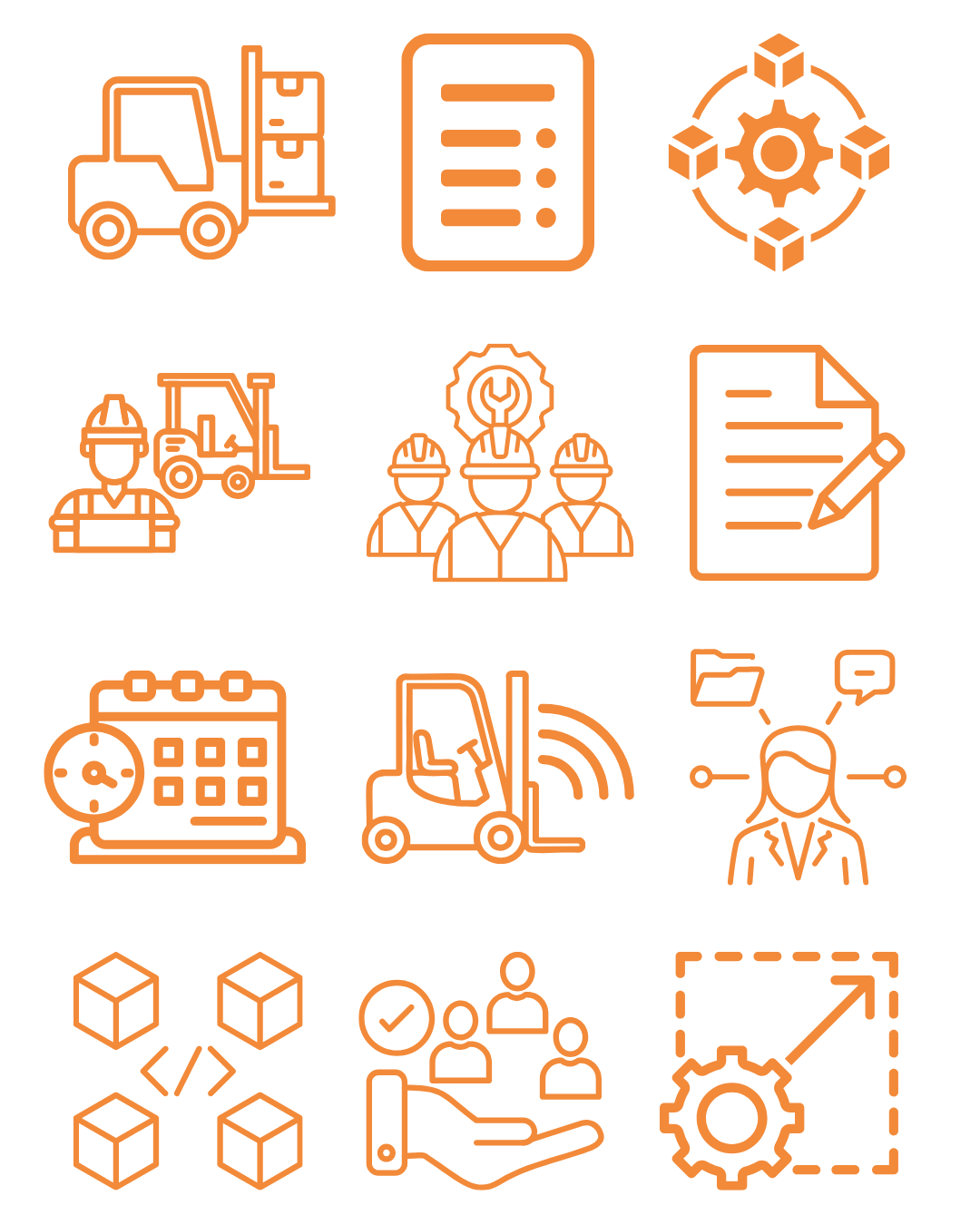
Typical challenges include:
Opportunities for
Industrial Truck Dealers
For industrial truck providers, digitalization is becoming a strategic driver of growth, efficiency and customer loyalty. Connecting equipment sales, rental service, workshop management and customer processes creates new opportunities to improve operations and develop more service-oriented business models.
Equipment rental is particularly important. Customers increasingly prefer flexible access to industrial trucks instead of purchasing every machine. Short-term rental, long-term rental, leasing and usage-based models require integrated processes for fleet availability, contracts, scheduling, equipment handovers, returns, maintenance and billing.
Service is also becoming a key differentiator in the material handling market. Customers depend on reliable equipment to keep warehouses, production facilities and logistics operations running. Integrated workshop management helps providers plan maintenance, coordinate repairs, manage spare parts and deploy technicians more effectively. This reduces downtime and improves the customer experience.
Connected equipment and telematics create additional opportunities. Operating hours, utilization, error messages and equipment condition can support preventive maintenance and more accurate service planning. Instead of reacting only after a breakdown, providers can identify requirements earlier and approach customers proactively.
Digital processes also strengthen the used-equipment business. Valuation, trade-in, refurbishment, documentation and resale can be managed more transparently. By connecting equipment, customer and service data, industrial truck providers gain a complete view of the equipment lifecycle and create the foundation for profitable, scalable services.
proaxia Solutions
With proaxia, industrial truck providers receive an integrated solution portfolio for sales, rental, service and workshop processes. From equipment and customer management to rental service, workshop planning, spare parts, telematics and billing, all relevant processes can be connected within one SAP-based environment. The result is greater transparency, more efficient operations and a digital service experience that supports sustainable growth.


FAQ
Ready for the next step?
Digitalize your industrial truck business with SAP-based solutions from proaxia and create the foundation for more efficient rental service, integrated workshop management, higher equipment availability and sustainable growth.