AI Readiness
AI Won’t Fix Broken
Business Processes
Why Clean Core, a Single Source of Truth, and Connected Enterprise Systems Are the Foundation of AI Readiness and Successful AI Adoption
Artificial Intelligence has rapidly become one of the highest priorities on executive agendas. Across industries, organizations are investing heavily in AI capabilities, expecting improvements in productivity, operational efficiency, customer experience, and decision-making. Yet despite the growing investment, many AI initiatives struggle to deliver the expected business value.
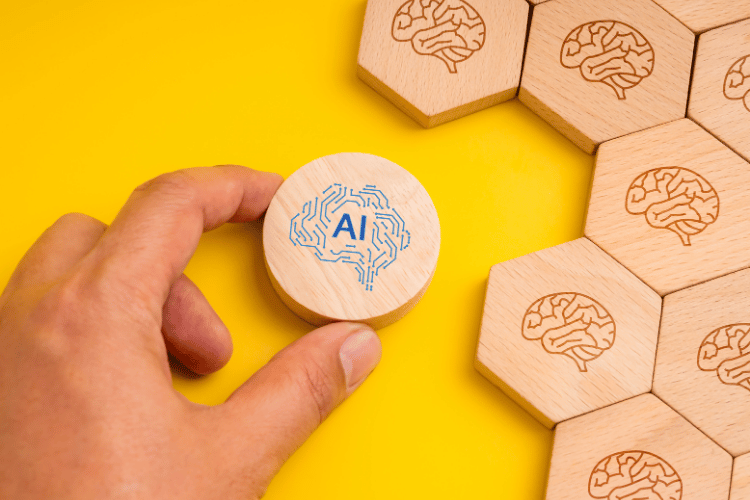
The reason is rarely the AI technology itself. More often, organizations attempt to introduce AI into environments where fragmented data, disconnected enterprise applications, and inconsistent business processes already exist. In these circumstances, AI simply accelerates existing problems rather than solving them.
The conversation therefore needs to shift. Instead of asking, “How do we deploy AI?”, organizations should first ask:
“Have we built the right foundation for AI to succeed?”

AI Readiness Depends on Reliable Information

Artificial Intelligence is fundamentally dependent on information. Every recommendation, prediction, automation, or insight generated by AI is based on historical data, business rules, and enterprise knowledge. AI does not independently determine what is correct; rather, it identifies patterns, relationships, and probabilities based on the information it receives.
When that information is duplicated, incomplete, outdated, or contradictory, the resulting outputs become equally unreliable. This is not a limitation of AI; it is a limitation of the business environment in which AI is expected to operate.
The principle remains unchanged:
Reliable business outcomes require reliable business information.
Clean Core Has Become a Business Imperative for AI Readiness
Historically, Clean Core has often been associated with ERP modernization, reduced customization, and simplified system maintenance. Today, its importance extends far beyond technology governance.
A Clean Core establishes standardized business processes, consistent master data, and sustainable system architecture, all essential prerequisites for scalable AI adoption. Organizations that maintain a simplified, well-governed enterprise landscape enable AI to interpret information with greater consistency and confidence. Rather than attempting to reconcile conflicting data from multiple sources, AI can focus on generating meaningful insights that support business decisions.
In the AI era, Clean Core is no longer simply an IT objective. It has become a strategic business capability.

The Value of a Single Source of Truth for AI Readiness

Every enterprise generates significant amounts of valuable information, from customer interactions and financial transactions to vehicle lifecycle data, workshop activities, supply chain operations, and OEM integrations. The challenge is not the lack of data; the challenge is that this information frequently exists across multiple applications, departments, and reporting structures.
When different functions produce different answers to the same business question, trust begins to diminish, not only in the data itself but also in the decisions derived from it. Artificial Intelligence cannot resolve these inconsistencies independently. It requires a trusted foundation.
Establishing a Single Source of Truth allows organizations to create one consistent version of business reality, enabling employees, analytics platforms, and AI models to operate from the same trusted information.
Connected Enterprise Systems Enable AI Readiness and Enterprise Intelligence
Modern organizations rely on multiple enterprise platforms to support different business functions, including Enterprise Resource Planning, Dealer Management Systems, Customer Relationship Management, OEM integration platforms, analytics solutions, and industry-specific applications.
Each system delivers significant value independently. However, the real competitive advantage emerges when these platforms operate as an integrated ecosystem rather than isolated applications. Integration enables business processes to flow seamlessly across departments while creating the consistent data foundation that AI depends upon.
Only within a connected enterprise can AI move beyond simple automation to deliver predictive insights, intelligent recommendations, and enterprise-wide decision support. AI should not become another disconnected application; it should become the intelligence layer across an already connected business.

AI Is an Accelerator, Not the Transformation

One of the most common misconceptions surrounding AI is the belief that technology alone creates transformation. History has consistently demonstrated otherwise. Technology amplifies existing business maturity.
Organizations with standardized processes, governed data, connected enterprise applications, and clear operational discipline will realize significantly greater returns from AI investments. Conversely, organizations attempting to automate fragmented environments often discover that AI simply exposes operational weaknesses more quickly.
Successful AI adoption therefore begins long before the first AI model is deployed. It begins with business transformation.
Building the Foundation for AI Readiness
Artificial Intelligence represents one of the most significant technological advancements of our generation. Its potential to improve productivity, enhance customer experiences, and support better business decisions is undeniable.
However, AI should not be viewed as a replacement for enterprise systems or business transformation initiatives. Instead, it represents the next evolution of them. Organizations that invest in Clean Core principles, trusted enterprise data, integrated business applications, and standardized processes are not simply preparing for their next ERP upgrade; they are preparing for the next generation of intelligent business.
Why integration matters more than software quantity

As organizations continue their AI journey, one principle is becoming increasingly evident:
Artificial Intelligence does not eliminate the need for strong enterprise systems; it reinforces their importance.
The organizations that will achieve sustainable value from AI will not necessarily be those that adopt AI first. They will be those that establish the strongest digital foundation before expecting AI to transform their business.
Ultimately, AI is not the strategy; it is the enabler. Like every enabler, its success depends entirely on the strength of the foundation beneath it. Organizations that invest first in Clean Core, a Single Source of Truth, and connected enterprise systems will be the ones best positioned to unlock AI’s full potential and create lasting business value.
From AI Ambition to AI Readiness: Building the Foundation for Real Business Value
AI promises greater efficiency, better decisions and improved customer experiences—but the decisive factor is whether the underlying processes, data and systems are ready.
This is where a modern, integrated Dealer Management System such as proaxia Vehicle Sales & Service (VSS) comes into play. As an intelligent, scalable and SAP-based platform, VSS connects core business processes in a genuine end-to-end solution—supporting Clean Core principles and creating the trusted, connected digital foundation that successful AI adoption requires.
The result:
A Single Source of Truth, greater transparency, better decisions and a strong foundation for scalable AI across the entire dealer organization.

proaxia Vehicle Sales & Service
SAP-based Dealer Management System for integrated sales, service and aftersales processes - efficient, transparent and scalable.
Take the Next Step Toward AI Readiness
Is your automotive or heavy equipment business ready to turn AI potential into measurable value?
Discover how VSS can connect your processes, strengthen your data foundation and prepare your organization for the next era of intelligent business.
Your expert

Shady Mohamed
VSS Partner Sales Manager, proaxia consulting group
Shady Mohamed is an automotive industry professional with broad experience across passenger cars, commercial vehicles, trucks, B2B operations, and digital transformation in the Middle East and Africa. At proaxia consulting group, he supports automotive organizations in modernizing their business operations, while also hosting “The Automotive Mentor” podcast to share real industry insights.