AI for EV Dealerships
Turning Electrification into a Competitive Advantage
The future is electric. The advantage is intelligent.
Electric mobility has moved past speculation. What looked like a future scenario only a few years ago now shapes sales figures in many of the world’s most important automotive markets. For every EV dealership, importer and service business, this means one thing: the business model is changing, and faster than expected. At the same time, artificial intelligence (AI) offers a technology that can address exactly the challenges electrification creates.
Yet there is a wide gap between the potential of AI and its actual contribution to business results. In this article, we look at where the EV market stands, which barriers EV dealers face, where AI is already used along the value chain and which foundation an EV dealership needs to turn AI from an experiment into a real competitive advantage.
1. The EV Market in 2025: Reality Outpaces the Forecasts
Up to 2.4 times more EVs than expected
A look at the forecasts published in 2020 shows how much the market was underestimated. At the time, BloombergNEF (BNEF) expected around 8.5 million electric vehicles to be sold worldwide in 2025. The International Energy Agency (IEA) forecast 10 to 14 million.
In reality, 20.7 million EVs were sold worldwide in 2025. That is up to 2.4 times more than analysts expected five years earlier.
| EVs sold in 2025 | |
|---|---|
| BNEF forecast (2020) | 8.5M |
| IEA forecast (2020) | 10 to 14M |
| Actual sales 2025 | 20.7M |
EV share of new car sales by selected countries
The share of EVs in new car sales in 2025 shows how far electrification has progressed:

What this means for an EV dealership in the Gulf
EV adoption is real, and it is moving faster than forecast. Precisely because Gulf markets are still at an early stage, now is the right time for every EV dealership in the region to prepare its sales and aftersales business for growing customer demand. Dealers who wait until the volumes arrive lose valuable time building the structures, skills and processes they need.
Sources: IEA (2025 sales); BloombergNEF and IEA projections published in 2020. Figures rounded.
2. The Entry Barriers: Challenges for EV Businesses and Dealers
The shift to electric mobility brings a range of structural challenges for dealers and service businesses. They affect investment, margins, staff and the used-car business alike.
What EV dealers face
What it means for the business
These challenges lead to three concrete effects on the EV dealership business:
- 1
Higher cost base. Investment in high-voltage equipment and certified technicians raises fixed costs before EV volumes pay back.
- 2
Lower profitability. Thinner vehicle margins and less maintenance work cut gross profit per vehicle sold and serviced.
- 3Higher inventory and remarketing risk. Volatile residual values and hesitation towards used EVs expose stock and trade-in values to write-downs.
3. The Opportunity of AI: Can AI Be the Answer for EV Dealerships?
The pressure: growth must come from what dealers already have
Margin pressure, scarce technicians, digital customer expectations and electrification itself limit organic growth. For an EV dealership, this means additional growth must come from what already exists: existing customers, vehicles, workshop capacity and data.
The opportunity: more revenue, productivity and profitability
Once well established, AI can lift revenue, productivity and profitability. The levers are broad:
The major risk: new AI silos
Many businesses introduce AI today through separate, disconnected tools. The result is new AI silos. Each tool keeps its own customer view, its own integration and its own governance. As long as AI only makes suggestions, this is inefficient. Once agents start changing orders and posting transactions, the risk rises significantly.
95 percent without measurable impact
A 2025 study by MIT NANDA shows how wide the gap between expectations and results is: 95 percent of enterprise generative AI pilots show no measurable impact on profit and loss.
The conclusion is not that AI is overrated. AI is here to stay and will reshape businesses far beyond the current hype. But it only delivers success when businesses move beyond experimentation and build the required foundation.
Source: MIT NANDA, The GenAI Divide (2025).
4. AI Beyond the Hype: Use Cases Along the EV Value Chain
Where is AI already used along the EV value chain today? An overview of the three core areas.
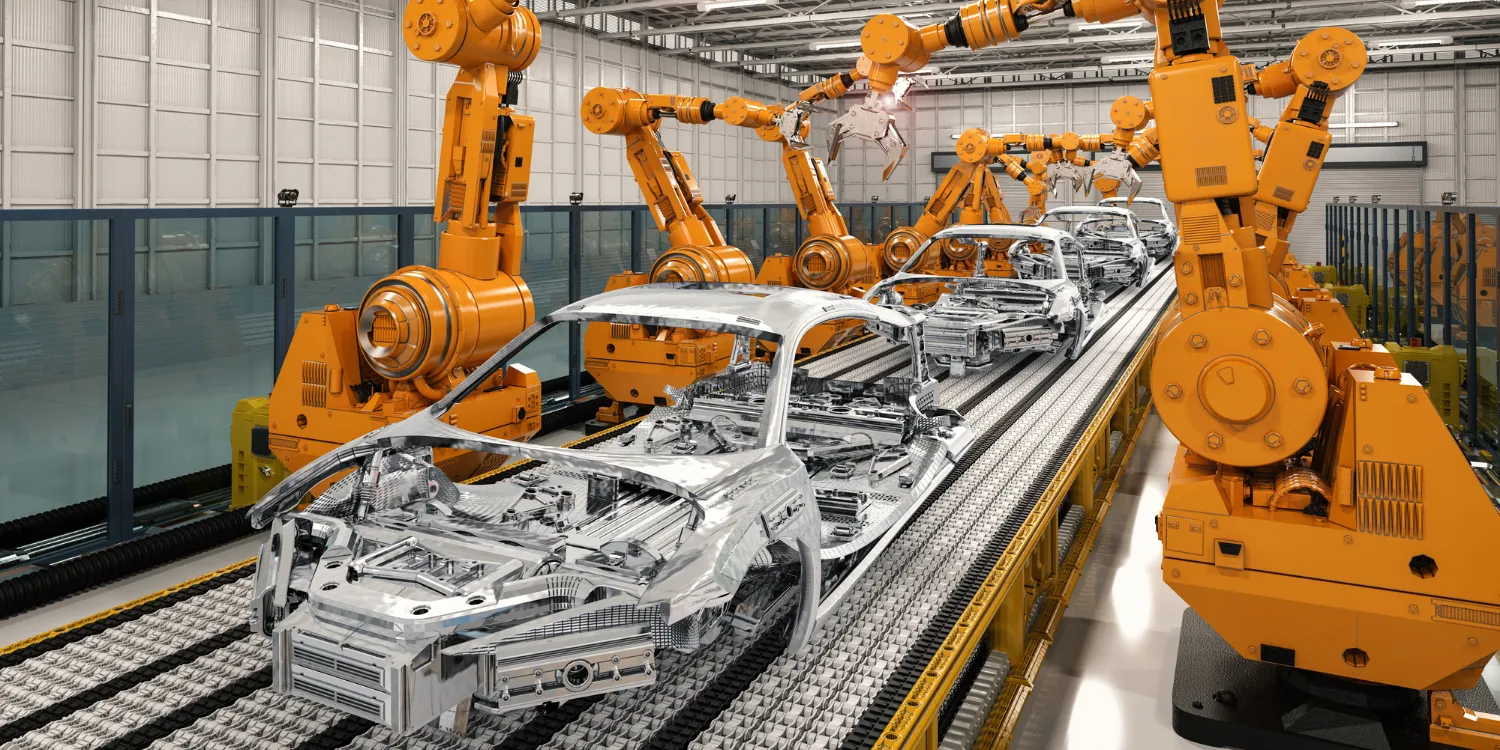
Manufacturing
Impact: higher utilization and productivity in production and lower costs for engineering, quality testing, scrap and rework.

Distribution and supply chain
Impact: higher turnover, shorter lead times and lower stocking and logistics costs.
Retail and aftersales in the EV dealership
Impact: higher workshop utilization and productivity, as well as increasing revenue, margins and profitability.
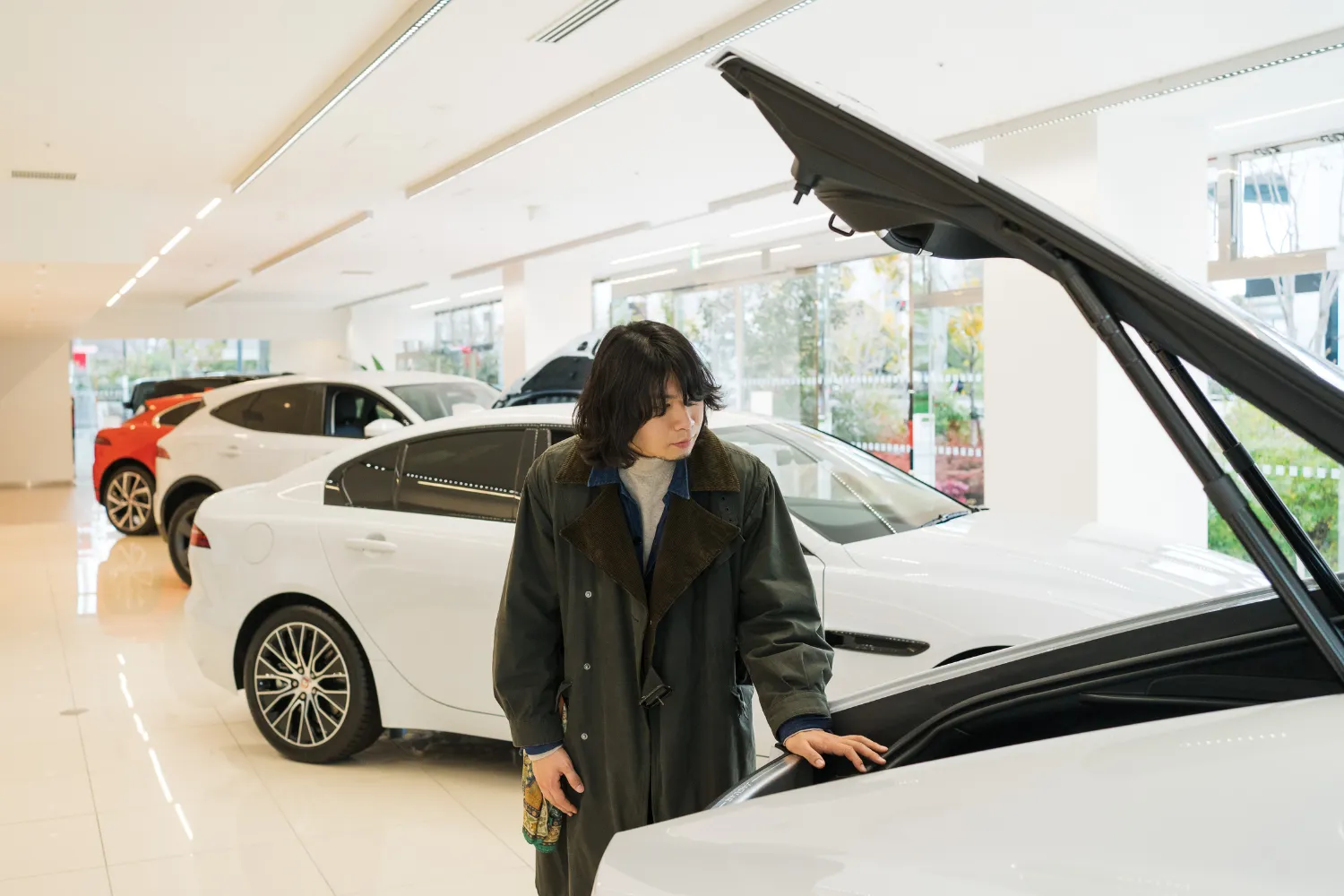
In retail and EV aftersales in particular, many of these applications address exactly the points where electrification creates pressure for the EV dealership: workshop utilization, service revenue, inventory and back-office efficiency.
5. The Three Required Dimensions for AI Adoption
Eight success factors make AI reliable enough to scale. They fall into three dimensions.

Dimension 1: Trusted business foundation
Success factor 1: End-to-end processes first
Success factor 2: Trusted data and business context
Success factor 3: Industry-specific AI
What it means: AI is only as reliable as the processes and data beneath it. It is not the AI model that sets one EV dealership apart from another, but the context: its processes, its data and its industry knowledge.

Dimension 2: Open, governed intelligence layer
Success factor 4: Reliability, security and governance as non-negotiables
Success factor 5: Stable business core, open AI layer
What it means: The business core is built for stability, while AI evolves within months. Both must be cleanly separated and connected at the same time. No agent gets more authority than its role allows.

Dimension 3: Continuous transformation
Success factor 6: Human and artificial intelligence combined
Success factor 7: Autonomy earned step by step
Success factor 8: Business transformation, not an IT project
What it means: AI moves from assisting to supervised execution to autonomous operation as its reliability is proven. Staff increasingly focus on exceptions.
The objective: one AI-enabled business and dealer platform
The goal is a single, AI-enabled business and dealer platform: integrated processes, shared data and enterprise governance beneath every assistant and every agent. Instead of many isolated tools, the EV dealership gains a foundation on which AI can scale safely.
6. The Three Stages Towards the Autonomous Enterprise
AI scales on the chosen business platform and gains autonomy as its reliability is proven. Using order processing and billing in aftersales as an example, the path can be described in three stages:
Stage 1: AI assists AI detects and flags incomplete repair orders. People make the decisions.
Stage 2: AI executes under supervision AI prepares invoices. People handle the exceptions.
Stage 3: AI operates autonomously AI bills defined standard cases on its own. People monitor the process.
Each stage builds on the previous one. Autonomy is not granted upfront but expanded based on proven reliability.
7. Next Steps for Your EV Dealership
How can an EV dealership get started? Four steps form the starting point:
- 1Build the foundation – Establish a business platform, for example SAP ERP including SAP Business AI combined with the proaxia dealer management system, and digitize all processes based on clean master data.
- 2Pick the first use cases – Prioritize use cases by value, risk and data readiness. Billing, for example, is an obvious starting point.
- 3Set AI governance – Define roles, authorizations and audit trails before agents go live.
- 4Form a business-led team – Build a team led by the business that brings together dealer, platform and change management experts.
Conclusion: The Intelligent EV Dealership
The future is electric, and the market figures leave no doubt. The advantage, however, is intelligent. It emerges where an EV dealership introduces AI not as a collection of isolated tools, but on a shared platform with integrated processes, trusted data and clear governance. Dealers who build this foundation now can develop AI step by step from assistance to autonomy and turn the structural challenges of the EV business into a competitive advantage.
proaxia consulting group ag is an SAP Gold Partner supporting asset- and service-based businesses with consulting, implementation, proprietary software and embedded AI. Our focus areas include Seamless Service, Automotive & Heavy Equipment with the dealer management system proaxia VSS on SAP S/4HANA, Business Technology, and Support & Operations.

Your expert

Sascha Lessmann
Head of proaxia MENA, proaxia consulting group
Based in Dubai, United Arab Emirates, Sascha Lessmann is responsible for business development and operations across the Gulf States, the Middle East, and Africa. With nearly 20 years of experience in the IT and SAP industry, he has successfully managed more than 12 SAP ERP implementations and rollouts, as well as numerous international projects across various industries. His leadership, customer focus, and extensive expertise make him a trusted advisor and business partner.