Leadership resilience through uncertainty
Why connected automotive operations matter more than ever

The automotive industry has always operated under pressure. But in today’s volatile market environment, resilience is no longer defined only by scale, market share, or operational efficiency. Increasingly, resilience is determined by how quickly leadership teams can react to disruption, adapt operations, and maintain visibility across the business.
From geopolitical uncertainty and supply chain disruptions to changing customer demand and logistics bottlenecks, automotive organizations are facing unprecedented complexity. What initially appears to be an isolated operational issue can rapidly affect aftersales operations, workshop capacity, inventory planning, fleet uptime, and ultimately customer satisfaction.
In many cases, the operational impact becomes visible long before financial reports reveal the consequences.
For automotive companies, dealer groups, and heavy equipment organizations, the ability to maintain connected operations and real-time visibility has become a strategic necessity rather than a competitive advantage.
Why operational resilience is becoming a leadership priority
During uncertain periods, leadership teams require immediate access to accurate operational data in order to make informed decisions quickly.
This includes visibility into:
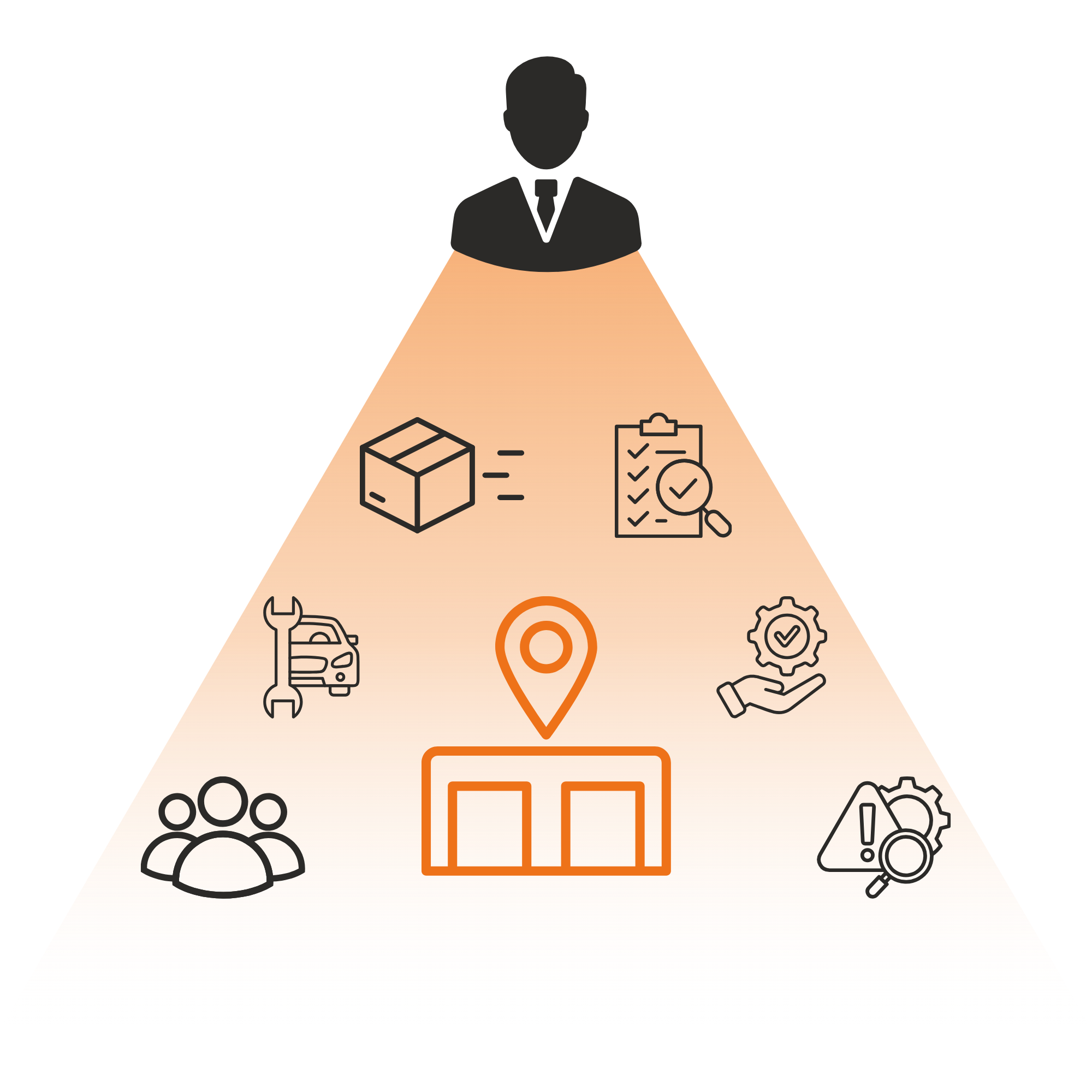
Without connected systems, businesses often struggle with fragmented information, delayed communication, and reactive decision-making.
This is especially critical in the automotive industry, where disruptions in logistics or supply chains can immediately affect vehicle availability, workshop operations, spare parts management, and customer commitments.
Organizations that rely on disconnected systems frequently experience slower response times during crises — precisely when speed and agility are most important.
Supply chain disruptions are reshaping automotive operations
Recent regional disruptions have demonstrated how quickly logistics strategies must adapt in the automotive sector.
In some cases, organizations were forced to reroute shipments away from traditional Gulf shipping routes through alternative logistics hubs such as Jeddah, followed by overland transportation into Gulf countries instead of using established maritime corridors through Hormuz.
While such changes may appear manageable from the outside, internally they create enormous operational complexity.
Automotive businesses suddenly need real-time coordination between:

Without integrated systems and transparent operational processes, these situations can quickly escalate into customer delays, inventory shortages, and increased operational costs.
Connected automotive operations reduce risk
One of the most important lessons many automotive organizations are learning is that resilience depends heavily on operational visibility.
Businesses that operate with connected, integrated systems are often better positioned to:

This is where modern automotive IT ecosystems become essential.
Dealer Management Systems (DMS), ERP platforms, CRM solutions, aftersales systems, workshop management tools, and supply chain platforms can no longer operate in silos.
The future belongs to connected automotive ecosystems that provide real-time operational transparency across the organization.
Why real-time visibility is critical for automotive leadership
In uncertain markets, leadership responsiveness becomes a decisive competitive factor.
Executives increasingly need answers to critical questions such as:

Without access to reliable operational data, leadership teams are forced into reactive decision-making. With connected platforms and integrated analytics, businesses can act proactively instead.
This shift from reactive management to predictive operational leadership is becoming one of the defining trends in the automotive industry.
Commercial vehicles and heavy equipment offer greater stability during market volatility
Another important development in the automotive market is the difference in resilience between industry segments. When B2C passenger vehicle demand slows down, many organizations shift focus toward sectors that remain operationally stable during uncertain periods.
These often include:

Infrastructure-driven sectors typically continue operating even during periods of economic or geopolitical instability.
As a result, many automotive organizations are increasingly balancing their business portfolios between passenger vehicles and B2B-driven operations in order to maintain operational continuity. This strategic adaptability has become an important resilience mechanism for modern automotive businesses.
AI and predictive analytics are transforming automotive resilience
Artificial intelligence is playing an increasingly important role in helping automotive organizations navigate uncertainty.
Modern automotive companies are exploring how AI can support:
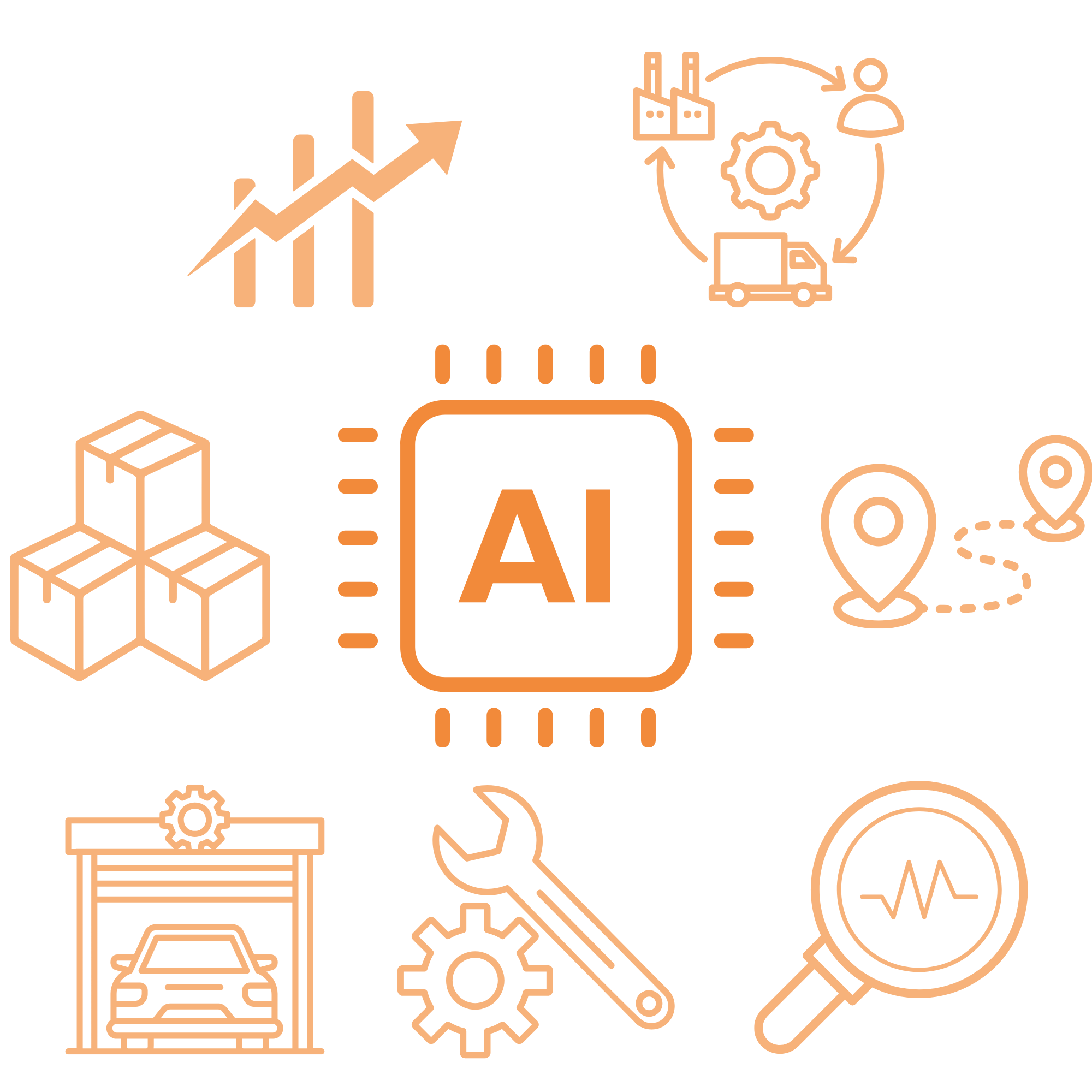
AI-driven analytics allow organizations to identify patterns and operational risks significantly earlier than traditional reporting methods. This enables faster operational response and more informed leadership decisions.
However, AI alone is not enough. Its effectiveness depends heavily on data quality, system integration, and connected operational processes.
Why integration matters more than software quantity
One of the biggest misconceptions in digital transformation is that resilience can be achieved simply by adding more software platforms.
In reality, many automotive organizations already operate with numerous systems across:

The challenge is often not the lack of systems — but the lack of integration.
During periods of operational pressure, businesses quickly recognize the difference between operating multiple disconnected platforms and managing a fully connected automotive ecosystem. This is why industry-specific, automotive-focused solutions are becoming increasingly important.
Automotive-specific platforms are becoming essential
Automotive operations are highly specialized and require deep process integration.
The complexity of:
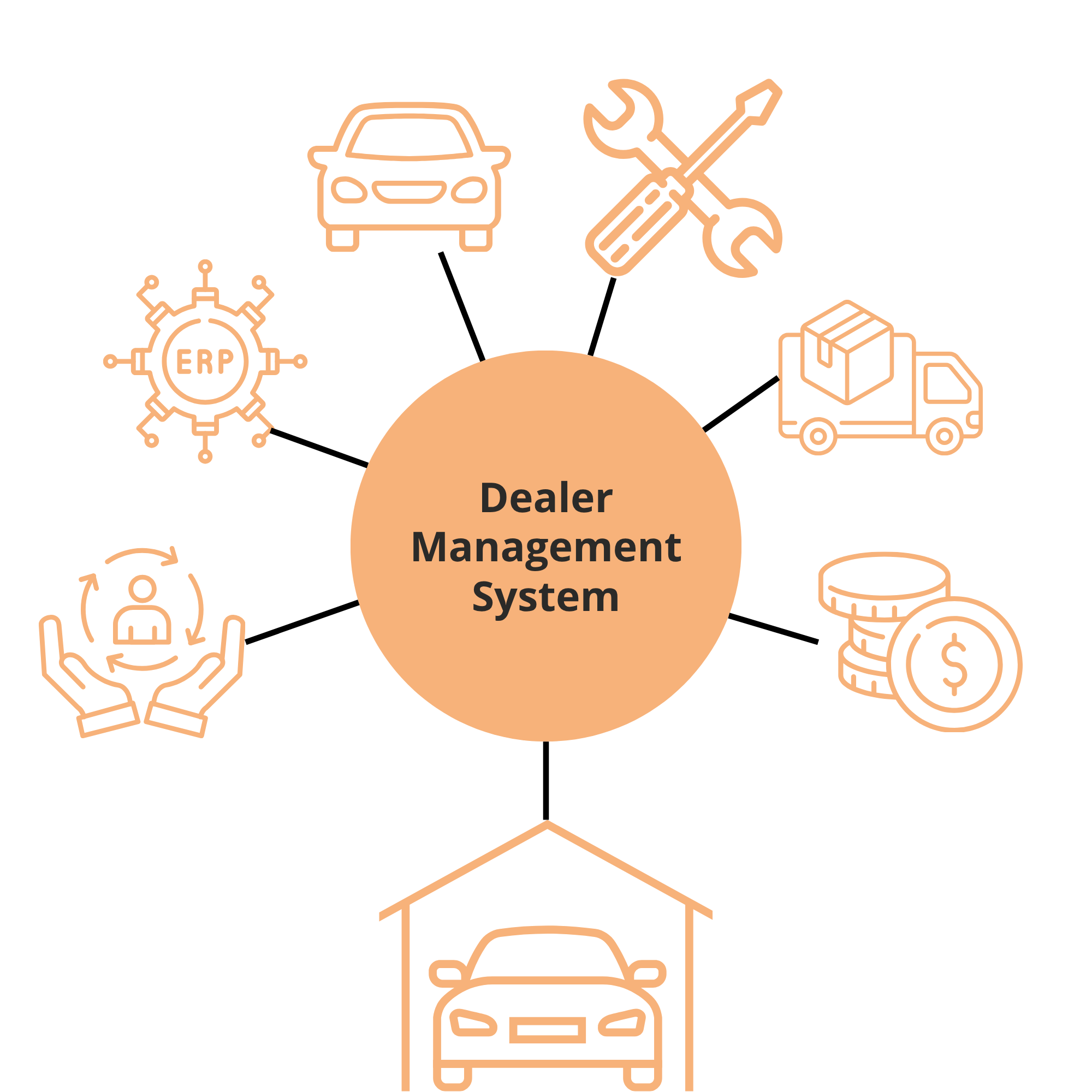
cannot easily be managed through fragmented generic systems. Organizations increasingly require platforms designed specifically around automotive operational realities. Industry-specific solutions help reduce process complexity while improving transparency, scalability, and operational efficiency.
Why many automotive companies continue investing during uncertain times
Interestingly, many automotive businesses are not slowing down their digital transformation initiatives during uncertain market periods. Instead, they are accelerating them.
The reasoning is straightforward:
Organizations that strengthen their operational foundations during difficult periods are often significantly better prepared once markets recover. These companies use uncertain periods to focus on:

Digital transformation is therefore evolving beyond modernization alone. Increasingly, it is becoming part of operational resilience itself.
The future of automotive resilience is digital
Today, resilience is no longer defined only by operational scale or inventory levels.
Modern resilience depends on:

Across the automotive ecosystem — from OEMs and importers to dealer groups, aftersales organizations, fleet operators, and heavy equipment providers — businesses are increasingly recognizing that resilience is becoming digital.
And during uncertain times, the organizations that adapt fastest are often those with the strongest operational visibility behind the scenes.
From theory to practice: How modern DMS solutions create real added value
Many systems promise this – but the decisive factor is implementation in practice.
This is where a modern, integrated solution such as proaxia Vehicle Sales & Service (VSS) comes into play. As an intelligent, scalable and SAP-based platform, VSS combines all core processes in a genuine end-to-end solution – supported by cloud technology and AI.
The result:
More transparency, better decisions and sustainable growth throughout the entire dealer organization.
Take the next step now
Would you like to make your dealership fit for the future?
Learn more about modern car dealer software and discover how VSS can take your automotive business to the next level.

Your expert

Shady Mohamed
VSS Partner Sales Manager, proaxia consulting group
Shady Mohamed is an automotive industry professional with broad experience across passenger cars, commercial vehicles, trucks, B2B operations, and digital transformation in the Middle East and Africa. At proaxia consulting group, he supports automotive organizations in modernizing their business operations, while also hosting “The Automotive Mentor” podcast to share real industry insights.