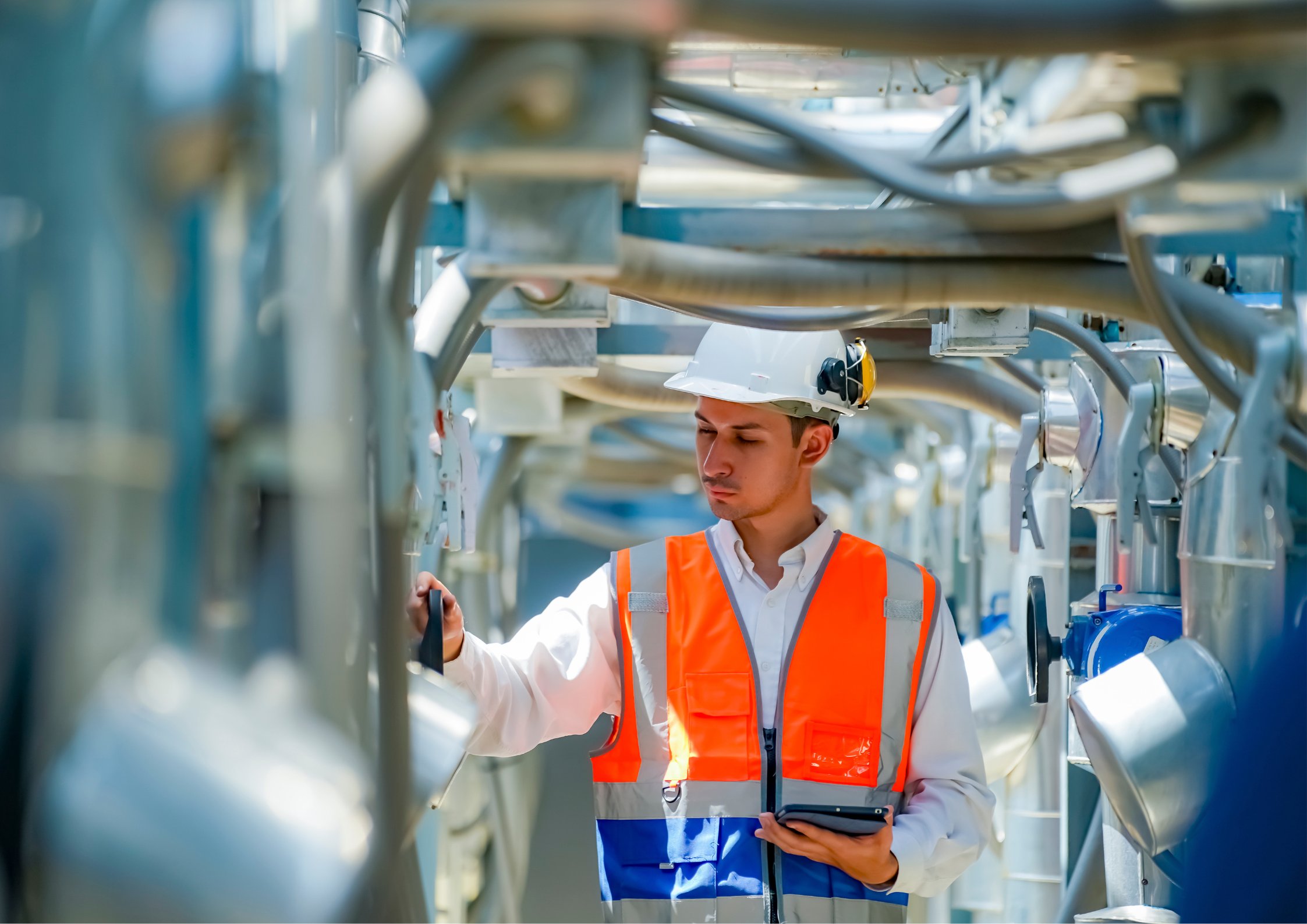
Maintenance Software
From a maintenance tool to
a strategic platform for operational excellence
Why Modern Maintenance Software Today Must Do Much More Than Just Schedule Maintenance

Maintenance requirements have changed fundamentally in recent years. While maintenance departments used to be primarily responsible for repairing and servicing technical equipment, they are now increasingly becoming a strategic factor in the success of the entire organization.
Manufacturing companies are under constant pressure to increase equipment availability and reduce costs while maintaining the highest quality and safety standards. Added to this are growing demands regarding sustainability, documentation, securing a skilled workforce, and digitalization.
At the same time, machines and production facilities are becoming increasingly complex. Modern production environments consist of highly interconnected system landscapes, and any failures in these systems can have an immediate impact on production capacity, delivery dates, and customer satisfaction.
Even just a few hours of unplanned downtime can have significant financial consequences. In many industries, this results in costs ranging from several thousand to hundreds of thousands of euros per hour.
Against this backdrop, the role of maintenance is undergoing a fundamental change.
It is no longer just about repairing machines. Rather, companies must be able to transparently monitor the condition of their equipment, proactively plan maintenance activities, and make data-driven decisions throughout the entire lifecycle of their assets.
Modern maintenance software provides the technological foundation for this.
It helps companies digitize maintenance processes, create operational transparency, and transform maintenance from a reactive activity into a strategic discipline.
What is modern maintenance software?
Today, maintenance software encompasses much more than just the management of maintenance schedules or work orders.
Modern solutions serve as an integrated platform for asset management, service management, and ERP processes, managing assets, resources, maintenance activities, and service processes.
They link information from different areas of the company and provide a unified view of the entire asset portfolio.
Typical features include:
This creates a digital foundation for informed decision-making and continuous improvement of operational processes.
The Biggest Challenges in Maintenance
Despite increasing digitalization, many companies still rely on siloed solutions, Excel spreadsheets, or paper-based processes.
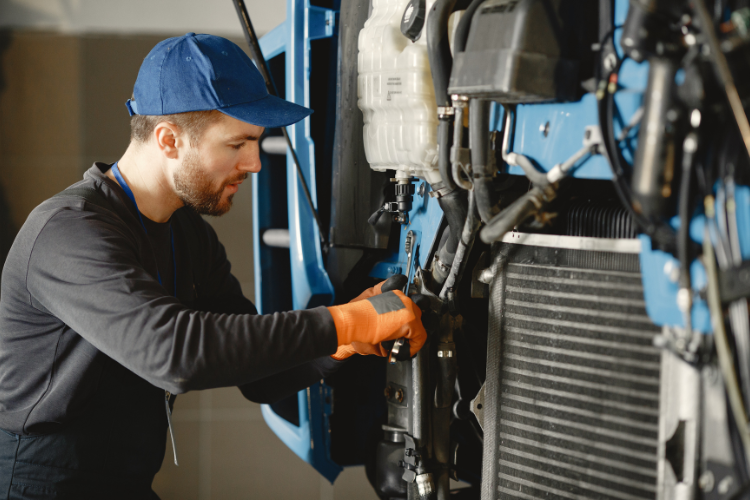
This often leads to a number of structural challenges:
A particular problem here is the lack of transparency regarding the actual condition of the facilities.
Maintenance tasks are often performed at fixed intervals, regardless of whether maintenance is actually needed. At the same time, potential risks remain undetected until a malfunction occurs.
The result is unnecessary maintenance costs on the one hand and unplanned downtime on the other.
Modern maintenance software helps companies systematically address these challenges and lay the groundwork for data-driven maintenance strategies.
The Most Important KPIs in Maintenance: What Should Really Be Measured
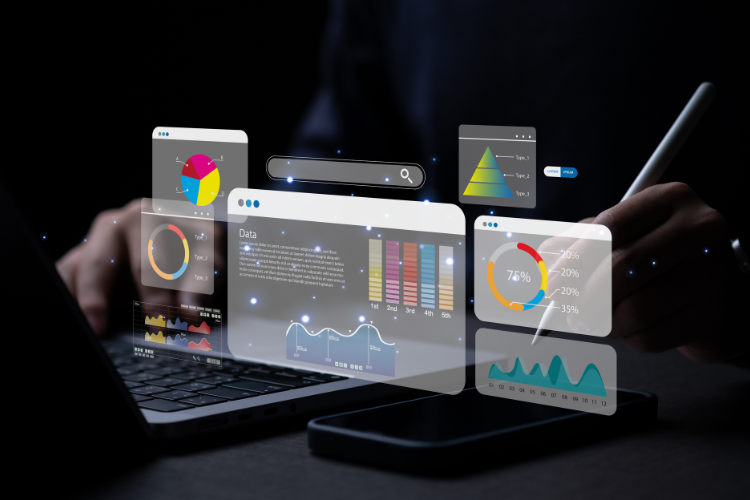
The benefits of maintenance software only become apparent when the improvements are made visible. Key Performance Indicators (KPIs) provide transparency regarding the efficiency of maintenance and repair processes and serve as the basis for data-driven decisions. One of the most important KPIs is equipment availability, which shows how reliably machines and equipment are available for production. Equally relevant is the Mean Time Between Failures (MTBF), which measures the average time between two failures and thus allows conclusions to be drawn about the reliability of assets. In addition, the Mean Time to Repair (MTTR) provides insight into how quickly malfunctions can be resolved.
Economic indicators are also becoming increasingly important. These include maintenance costs per piece of equipment, the costs of unplanned downtime, and the ratio of planned to unplanned maintenance activities. A high proportion of unplanned repairs often indicates room for improvement in the maintenance strategy and generally results in significantly higher costs than preventive measures.

In addition, many companies track the on-time completion rate of maintenance orders, technician utilization, and spare parts availability to identify bottlenecks early and allocate resources more efficiently. Modern maintenance software helps automate the collection of these metrics, analyze them in real time, and present them in informative dashboards. As a result, maintenance evolves from a reactive cost center into a data-driven management function that actively contributes to the company’s productivity, equipment availability, and competitiveness.
Transparency throughout the entire plant lifecycle
One of the biggest challenges facing many companies is making information about equipment, maintenance, and repairs available in a centralized location.
In many organizations, this information is scattered across different systems. As a result, there is often a lack of a foundation for strategic decision-making. Modern maintenance software consolidates all relevant information:
This provides a comprehensive picture of the condition and performance of individual assets. Companies can make more informed decisions about which assets should be modernized, replaced, or monitored more closely.
Asset Lifecycle Management (ALM) enables physical assets to be planned, maintained, and optimized throughout their entire lifecycle—from the investment decision to decommissioning.
The goal is to maximize the value of assets, machinery, vehicles, or infrastructure while minimizing costs, risks, and downtime.
Mobile Maintenance Software: Information Where It’s Needed
The digitization of maintenance doesn’t stop at the office. The real added value is created where maintenance and service work is performed—right at the machine or system.
Modern maintenance software provides technicians with all relevant information on the go. Using smartphones, tablets, or industrial devices, employees can access work orders, maintenance schedules, technical documentation, and service histories.
This eliminates the need to search for information in different systems or paper documents. At the same time, maintenance activities can be documented immediately, and information can be shared with other departments in real time.
The key benefits of mobile maintenance solutions include:
Mobile maintenance is increasingly becoming the norm, particularly for decentralized locations or service organizations with operations spread across the globe.
Maintenance Software as a Component of Modern Asset Management
In many companies, maintenance is still viewed in isolation. In fact, however, it is a central component of holistic asset performance management. The goal is not only to resolve malfunctions, but also to optimally manage the entire lifecycle of a piece of equipment.
Modern maintenance software helps companies answer important questions:
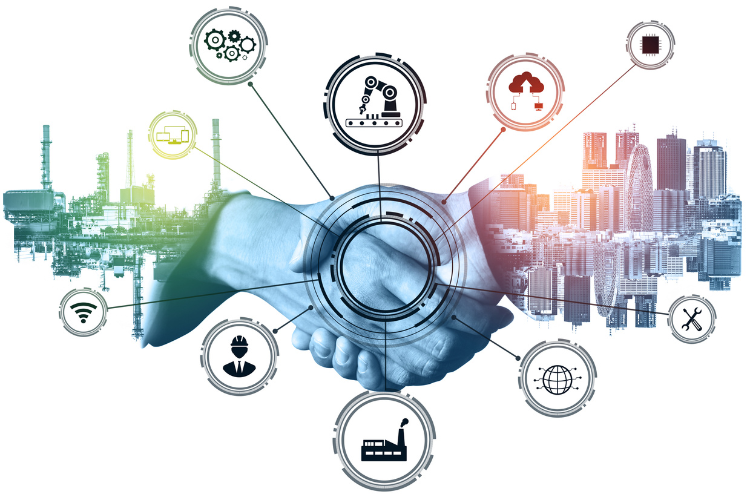
Combining operational data, maintenance histories, and cost information provides a solid basis for decision-making regarding investments and modernization measures.
This gives companies a much better overview of their asset performance and enables them to optimize their maintenance strategy over the long term.
From Reactive Maintenance to Predictive, Prescriptive, and Autonomous Maintenance
The real transformation in maintenance begins when companies fundamentally change their maintenance strategy.
Traditionally, many organizations still operate using a reactive approach: equipment is repaired as soon as a failure occurs. At the next level of maturity, maintenance is performed proactively based on fixed time intervals or defined usage cycles. However, both approaches often lead to unnecessary maintenance, inefficient use of resources, or unplanned downtime.
Today, modern maintenance platforms enable a condition-based and increasingly data-driven approach. By integrating sensor data, IoT technologies, operational information, and artificial intelligence, potential failures can be detected early and maintenance needs can be accurately predicted. This approach is known as predictive maintenance.
As a result, maintenance is no longer performed at fixed intervals, but rather exactly when the actual condition of a system requires it.
The next stage of development, however, goes much further. While predictive maintenance predicts that a problem will occur, prescriptive maintenance also answers the question of what measures should be taken.
Based on historical service cases, maintenance data, operational statuses, and AI-driven analyses, modern systems can generate specific recommendations for action:
As a result, maintenance is evolving from a purely predictive function to an intelligent decision-support tool.
The use of business AI, digital assistants, and integrated service platforms ultimately gives rise to the next stage of evolution: Autonomous Maintenance.
Here, systems are no longer limited to making recommendations; instead, they independently initiate actions and orchestrate processes across system boundaries. For example, if an AI detects an increased risk of failure, the following can happen automatically:
In this context, the role of humans is increasingly shifting from operational control to the monitoring and optimization of processes.
For companies, this development represents a fundamental transformation: Maintenance is evolving from a reactive support function into an intelligent and increasingly autonomous component of the value chain.
The benefits are significant:
As a result, maintenance is evolving from a traditional maintenance organization into a data-driven, intelligent, and — in the future — autonomous operating model that makes a significant contribution to operational excellence and the intelligent enterprise.
The Role of AI in Modern Maintenance
Artificial intelligence is increasingly evolving from an analytical tool to an active participant in maintenance and service processes. While AI was initially used primarily to analyze operational and maintenance data, intelligent assistants are now being developed that support employees in making decisions and are increasingly initiating processes on their own.
Modern maintenance solutions continuously analyze large volumes of historical and real-time data from equipment, sensors, service calls, and maintenance records. This enables companies to:

However, the real added value is created when these insights are directly incorporated into operational processes.
Current developments in the SAP Business AI ecosystem and the SAP Asset & Service Assistant offer a glimpse of a possible future scenario. For example, if the system detects an unusual temperature trend at a critical piece of equipment based on sensor data, the AI automatically analyzes historical service cases, technical documentation, and maintenance records. It can then identify the most likely cause of the fault, generate specific recommendations for action, and proactively notify the responsible maintenance technician.

In the next step, the AI will no longer be limited to making recommendations. It will be able to independently create a maintenance order, reserve the necessary replacement parts, suggest a qualified technician, and determine the optimal maintenance time based on production and resource schedules.
As a result, maintenance personnel no longer receive just data or warning messages, but rather a specific, context-based recommendation for action that includes all the information needed to make a decision.
However, this development is continuing. With agent-based AI systems and so-called “autonomous suites,” increasingly autonomous maintenance processes are emerging. In these scenarios, intelligent software agents independently coordinate collaboration between asset management, service management, supply chain, and ERP systems.
The system identifies a risk, assesses its business impact, plans the necessary actions, and automatically initiates the required processes. Humans continue to serve as supervisors, making the final decision or monitoring the implementation of critical actions.
As a result, maintenance is evolving from a reactive support function, through predictive and prescriptive maintenance, to an intelligent, increasingly autonomous control model. Companies benefit from higher equipment availability, faster response times, lower operating costs, and significantly better utilization of knowledge, data, and resources.
The long-term vision is a maintenance organization in which AI not only provides information but also actively helps prevent outages, accelerate decision-making, and orchestrate processes largely autonomously. Modern asset and maintenance platforms are currently evolving in precisely this direction.
Conclusion: Maintenance software is becoming a platform for the intelligent operation of facilities
Modern maintenance software is increasingly moving beyond traditional approaches such as reactive, preventive, or predictive maintenance. By combining Asset Performance Management (APM), ERP business data, and integrated service processes, risks can be identified early, actions can be prioritized, and their execution can be efficiently managed.
The trend is moving toward an end-to-end platform that intelligently integrates asset management, maintenance, and service. In the long term, this will lead to the vision of autonomous maintenance management, in which AI systems identify risks, recommend actions, plan resources, and orchestrate service processes in a largely automated manner.
The future of maintenance isn’t just digital.
It is intelligent, connected, and increasingly predictive.

Take the next step now
If you want to digitize and sustainably optimize your service processes, it is worth taking a look at modern solutions in the field of field service & asset management software.
SAP Field Service & Asset Management
Start your digital transformation here
Your expert

Sebastian Behne
COO Seamless Service, proaxia consulting group
Sebastian Behne has been supporting companies in the digitalization of service, sales and asset management processes in the SAP environment since 2004. His focus is on international service transformations in asset-intensive industries. In close cooperation with SAP, Sebastian Behne drives the further development of proaxia Seamless Service Solutions and industry add-ons for end-to-end service processes – from customer engagement to service operations and field service & asset management.