Field Service Management Software
How companies increase efficiency
and service quality in technical field service

Rising customer expectations, more complex systems, a shortage of skilled workers and growing cost pressure are currently fundamentally changing the requirements for service organizations. Companies are faced with the challenge of managing technical field service processes more efficiently while improving service quality, transparency and response times.
This is precisely where modern field service management software becomes a decisive success factor.
Field Service Management Software helps companies to digitize service processes, make them more efficient and secure long-term competitive advantages.
What is field service management software?
Field Service Management Software is a digital solution for planning, controlling and optimizing field service processes. It connects scheduling, service technicians, customers and company systems in one central platform.
Typical areas of application are
The software ensures that all processes – from resource planning to documentation – are seamlessly integrated.

Why field service management software is indispensable today

Companies today face numerous challenges in the service sector,
among them:
Without digital support, these requirements can hardly be met efficiently.
More efficiency through automation
A key strength of modern Field Service Management Software is the automation of service processes. Scheduling, appointment allocation and route optimization are automated and take various factors into account:
This allows idle times to be reduced, resources to be used more efficiently and service assignments to be optimally coordinated.

Higher customer satisfaction through transparent service processes
Today’s customers expect fast, transparent and reliable services. A modern field service management software supports companies with functions such as
This sustainably improves the customer experience and strengthens customer loyalty.
Transparency through real-time data
With a modern field service management software companies have access to up-to-date service and operating data at all times. These include, among others:
Real-time transparency improves decision-making and enables continuous optimization of service processes.
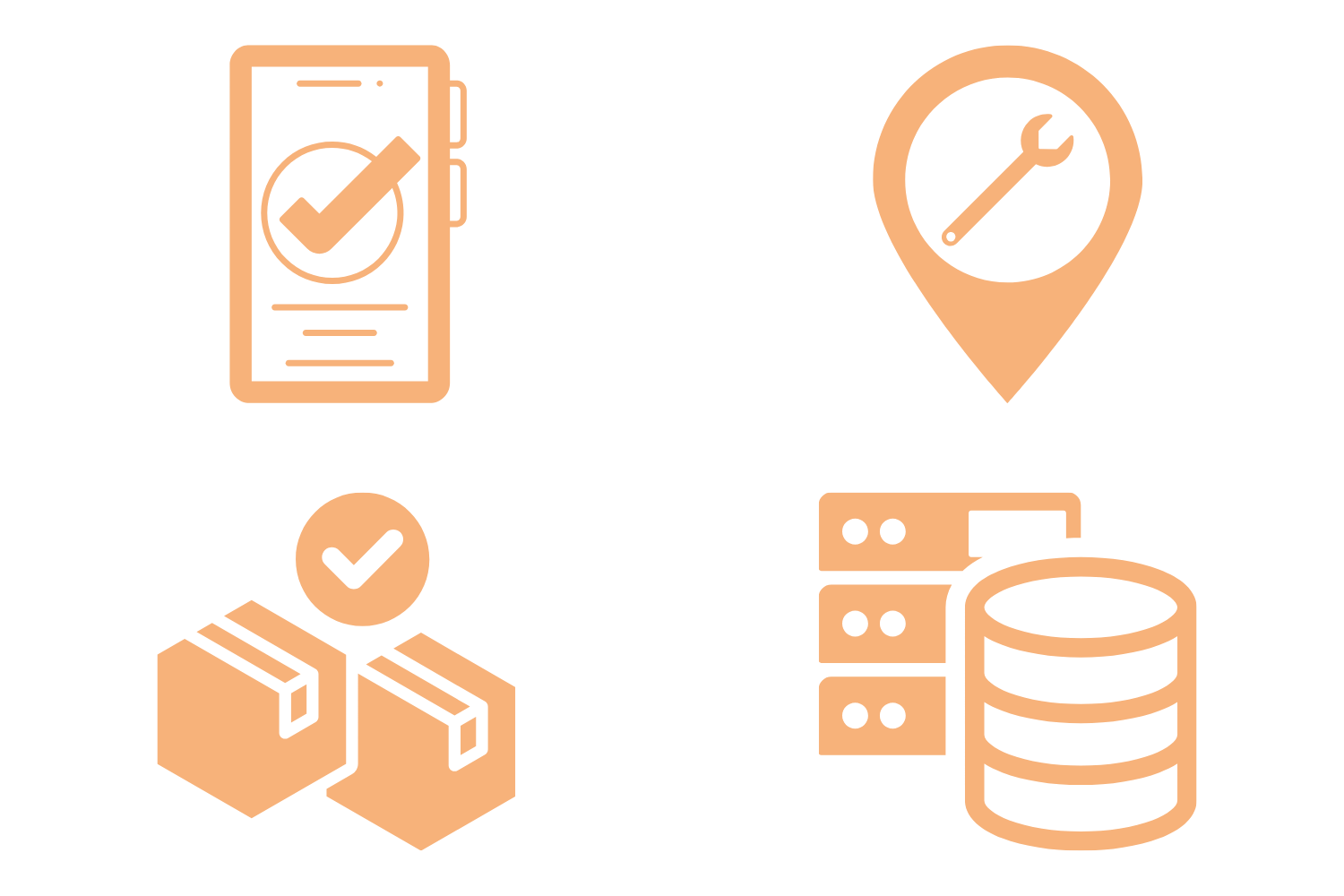
Central functions of modern field service management software

Not every solution offers the same range of functions. A modern field service management software supports companies in making service processes more efficient, optimally deploying resources and sustainably improving service quality. Functions for intelligent deployment planning, mobile service processes and seamless integration into existing systems are particularly important.
Intelligent disposition
Intelligent deployment planning ensures that internal and external service technicians are scheduled efficiently. Based on defined rules or AI-supported processes, the right technician is automatically scheduled at the right place at the right time. This allows response times to be shortened and service assignments to be optimally coordinated.
Mobile solutions for technical field service

Mobile applications give technicians access to all relevant information – at any time and directly on site. These include, among others:
This allows service calls to be carried out efficiently and information to be recorded in real time.
Success factor:
Integration of field service management software
Many companies underestimate the fact that field service management only works sustainably if service processes are seamlessly integrated into existing company processes. After all, service deployment does not end with the technician appointment.
A successful end-to-end service process combines, among other things:

This is precisely where many isolated service solutions fail in practice. Without integration, new data silos, manual handovers and additional complexity arise.
Consistent integration is therefore a key success factor, especially for international or scaling service organizations.
Predictive maintenance
With the integration of IoT sensors and asset management solutions, modern field service management software enables the predictive maintenance of systems and machines. Companies benefit from, among other things:
This enables service organizations to increase their efficiency and improve customer satisfaction at the same time.
Digital service reports
Service reports are created digitally on site and synchronized automatically. Companies benefit from this:
This speeds up service processes and sustainably improves data quality.
What makes a good field service management software?
When selecting a suitable field service management software companies should consider various criteria.
Future trends in field service management
The development of modern Field Service Management Software is increasingly characterized by new technologies. These include, among others:

Companies that adopt these technologies at an early stage create the basis for more efficient service processes and long-term competitive advantages.
For which companies is field service management software suitable?
A modern field service management software is suitable for medium-sized companies through to international corporations that want to efficiently plan, control and digitize service and field service processes. It is particularly relevant for companies with complex service processes, high customer requirements or a large field service team.
Typical sectors include:

In addition, similar operational requirements are increasingly arising in related areas such as inspection, audit and assessment processes – for example in the insurance industry, for technical inspections or regulatory on-site assessments. The boundaries between traditional field service, inspection management and data-based service processes are becoming increasingly blurred.
Companies with many service assignments, complex deployment planning, high SLA requirements or international service organizations in particular benefit from digital and integrated end-to-end service processes.
Why many field service management projects fail
In many companies, field service management is still primarily seen as a mobile or scheduling solution. This often limits the actual added value.
Typical challenges are

Successful service transformations therefore not only look at scheduling or the field service itself, but at the entire service process – from customer interaction to billing.
Conclusion: Field service management software as a strategic success factor
Field Service Management Software is much more than just an operational tool today. It supports companies in efficiently managing service processes, reducing costs and sustainably improving service quality.
Companies benefit in particular from:

Take the next step now
If you want to digitize and sustainably optimize your service processes, it is worth taking a look at modern solutions in the field of field service & asset management software.

SAP Field Service & Asset Management
Start your digital transformation here
Your expert

Sebastian Behne
COO Seamless Service, proaxia consulting group
Sebastian Behne has been supporting companies in the digitalization of service, sales and asset management processes in the SAP environment since 2004. His focus is on international service transformations in asset-intensive industries. In close cooperation with SAP, Sebastian Behne drives the further development of proaxia Seamless Service Solutions and industry add-ons for end-to-end service processes – from customer engagement to service operations and field service & asset management.